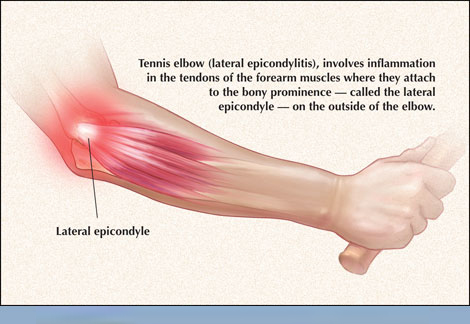
Tennis elbow also known as lateral epicondylitis is a common condition that can cause hindrance in the elbow movements of a person. This condition is a result of overuse of the muscles and tendons of the arm, wrist, and elbow. As the name suggests many people often think that this is a sports injury and can only occur in people actively involved with Tennis, badminton, or other racket games. However, Tennis elbow is seen very often in people who have jobs involving a lot of physical movements like plumbing, painting, carpentering, butchering, typing, etc.
What are the Potential Causes of Tennis Elbow?
Now that we have understood what are the symptoms of a Tennis elbow let us also check what can cause a condition like this. Below mentioned are some of the common causes of a Tennis Elbow:
- Repetitive movement of the muscle:
- Trauma
- Improper technique
- Occupational risks
- Aging
Watch Out for the Symptoms of Tennis Elbow
- Pain in the outer elbow
- Tenderness
- Weekend Grip strength
- Stiffness and swelling
- Restricted wrist movements
Probable Treatment Course:
Treatment for tennis elbow focuses on relieving pain and inflammation, improving tendon function, and preventing recurrence. Initial management typically involves conservative approaches such as rest, ice, and physical therapy. Advanced therapies like injections or shockwave treatment may be used for persistent symptoms, with surgery reserved for severe or non-responsive cases.
- Ice and Heat Therapy
- Compression
- Pain Relief
- Physical Therapy
- Activity Modification
- Occupational Therapy
- Bracing
- Injections- steroid injections for chronic and inflamed tendons and PRP injections for sub-acute tears of the tendon to promote healing
- Surgeries like Tendon Debridement, Tendon Repair and Open or Arthroscopic Surgery
Dr Banarji’s expertise on Tennis Elbow
Dr Banarji, an expert orthopaedic specialist in Bangalore is very well-experienced and can determine the appropriate course of treatment for tennis elbow based on the patient’s overall medical condition, age, and lifestyle. Before going for a direct surgery Dr Banarji can suggest nonsurgical treatments for better recovery.
Nonsurgical treatments for tennis elbow can include using a counterforce brace or elbow strap, receiving corticosteroid or Platelet-Rich Plasma (PRP) injections, undergoing occupational or physical therapy with specific stretching and strengthening exercises, taking anti-inflammatory medication, and ensuring adequate rest. In case the doctor needs that surgery he may recommend arthroscopic or open surgery to repair or debride the damaged tendon.


